
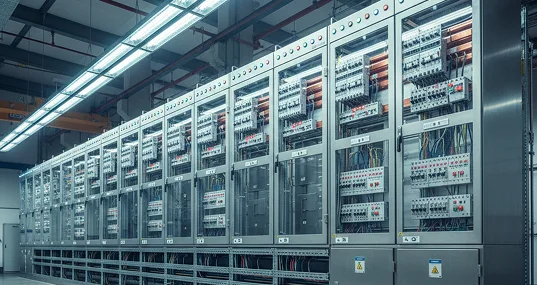
PCC Panels
Designed for efficient power distribution and
centralized control in high-voltage systems.
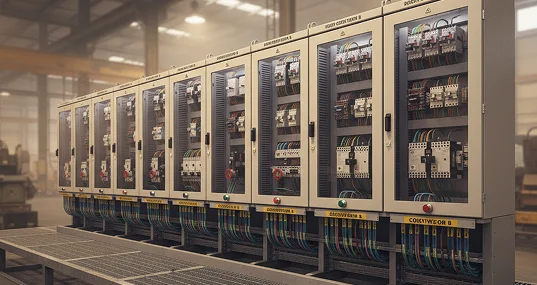
MCC Panels
Motor Control Centers engineered for precise
motor management in industrial environments.

Generator Synchronizing
Advanced synchronizing panels for seamless
paralleling of multiple generator sets.

APFC Panels
Automatic Power Factor Correction panels to
improve energy efficiency and reduce penalties.
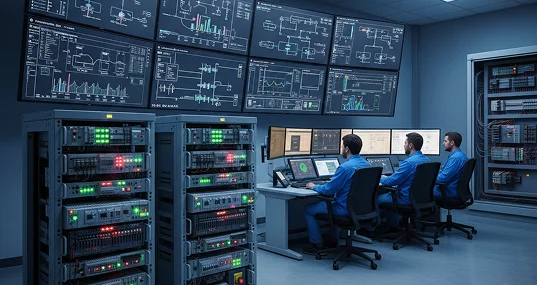
Process Automation
Intelligent automation panels integrating
PLCs, SCADA, and control logic for
complex processes.
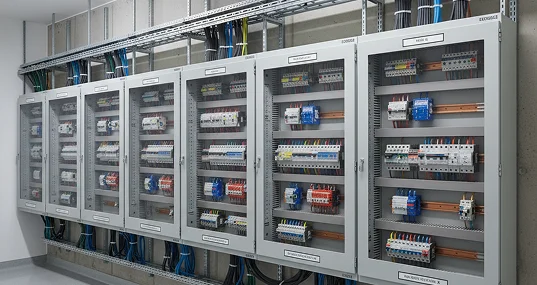
Distribution Boards
Robust distribution boards ensuring safe and
efficient power routing across facilities.

Main Power Distribution

Industrial Plant Operations

Utility Power Systems

Infrastructure Projects

Motor Control Systems
Production Line Operations

Pump & HVAC Systems

Industrial Automation Control


Generator Load Sharing

Marine Power Systems

Backup Power Solutions

Critical Facility Power
Energy Efficiency Optimization
Industrial Power Management
Commercial Electrical Systems
Utility Power Correction
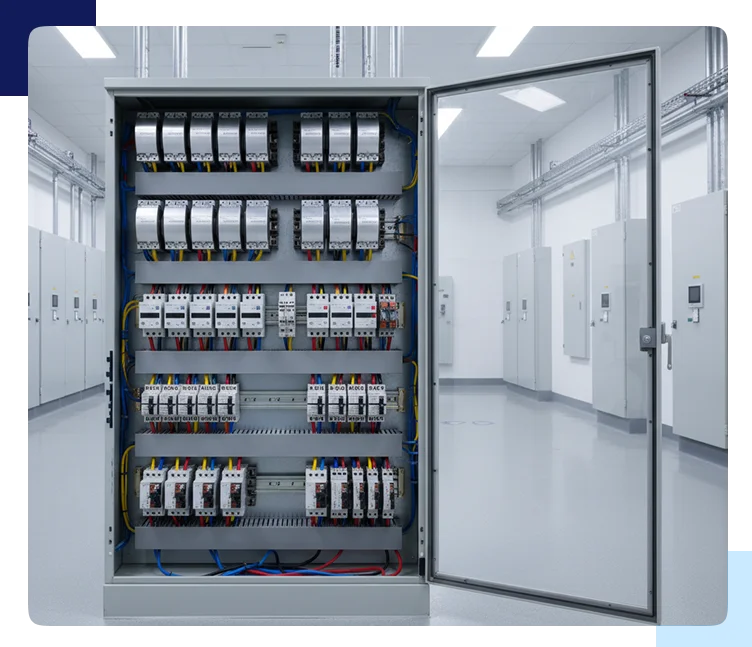

PLC-Based Control Systems

Process Industry Automation
Automated Production Lines

Smart Factory Integration
Internal Power Distribution
Building Electrical Systems
Industrial Workshop Supply
Infrastructure Power Networks

Manufacturing
Process & discrete
manufacturing

Marine
Vessels, shipyards,
offshore

Energy
Power plants,
utilities

Infrastructure
Commercial &
institutional

Oil & Gas
Refineries,
pipelines

Utilities
Water, wastewater,
distribution

Application-Specific Design
Every panel is engineered from ground up to match the exact operational requirements of the application.

High-Quality Components
We source from globally certified brands Schneider, ABB, Siemens ensuring longevity and reliability.

Tested for Safety
Rigorous in-house testing against IEC 61439 and IS standards before every shipment.

Automation-Ready
All panels are designed to integrate seamlessly with PLC, SCADA, and Industry 4.0 architectures.

Requirement Analysis
Understanding load profiles, site conditions, and operational goals to define the right specification.

Engineering Design
Detailed SLD, wiring diagrams, and BOM prepared by experienced engineers aligned to IEC standards.

Manufacturing
In-house fabrication with precision sheet metal work, busbar sizing, and component mounting.

Testing & Inspection
100% factory acceptance testing including functional, insulation, and protection relay testing.

Installation & Support
Site installation, commissioning, and 24/7 post-installation support to ensure zero downtime.

Location
B-104, Ganga Nivas, Shere Naka,
Ratnagiri, Pin- 415612,
Maharashtra, India.

Phone
+91 98765 43210

info@dhruvapowertronics.com